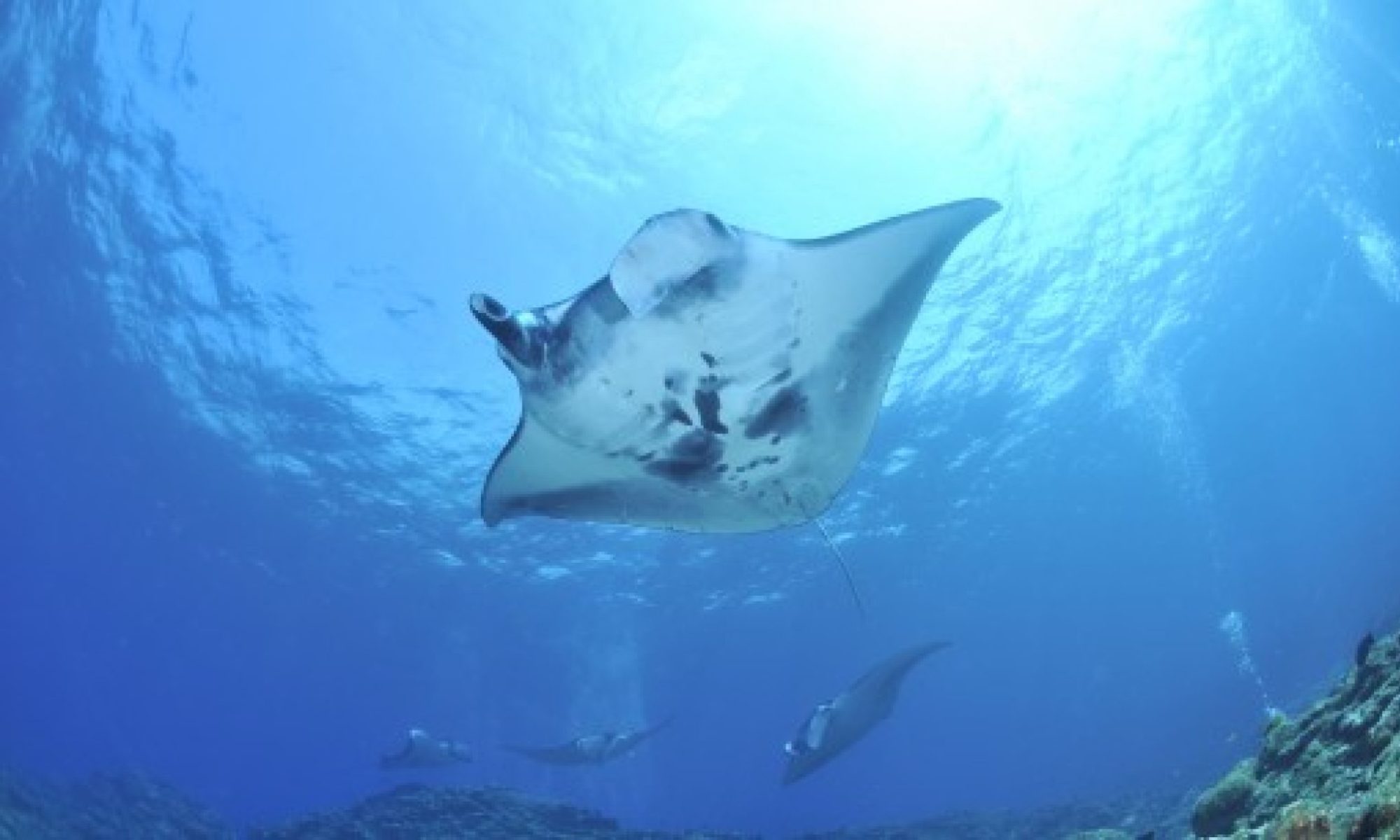
A third manta ray species has been formally recognized! After over a decade of speculation, lead manta ray researcher Dr. Andrea Marshall discovered the latest recognized species the Atlantic manta ray (Mobula yarae).
This sub-species was confused with the oceanic manta ray for over a decade because of their similarities to their cousins— the giant oceanic manta (Mobula birostris) and the reef manta (Mobula alfredi).
The characteristics that set Atlantic manta rays apart from their cousins are their V-shaped white patches among the shoulders, lighter coloring around the mouth and eyes, and dark spots on the abdomen.
The Atlantic manta rays can grow as large as the giant oceanic manta—with a grand wing span of 16 and 20 feet. And similar to reef manta rays, the Atlantic mantas are also found in coastal waters. The Atlantic manta ray’s habitat consists of Atlantic tropical and subtropical waters, which stretches from the eastern United States to Brazil and includes the Gulf of Mexico and Caribbean Sea.
This new discovery is great news because the manta ray conservation community can tailor research and conservation efforts to protect this species.